
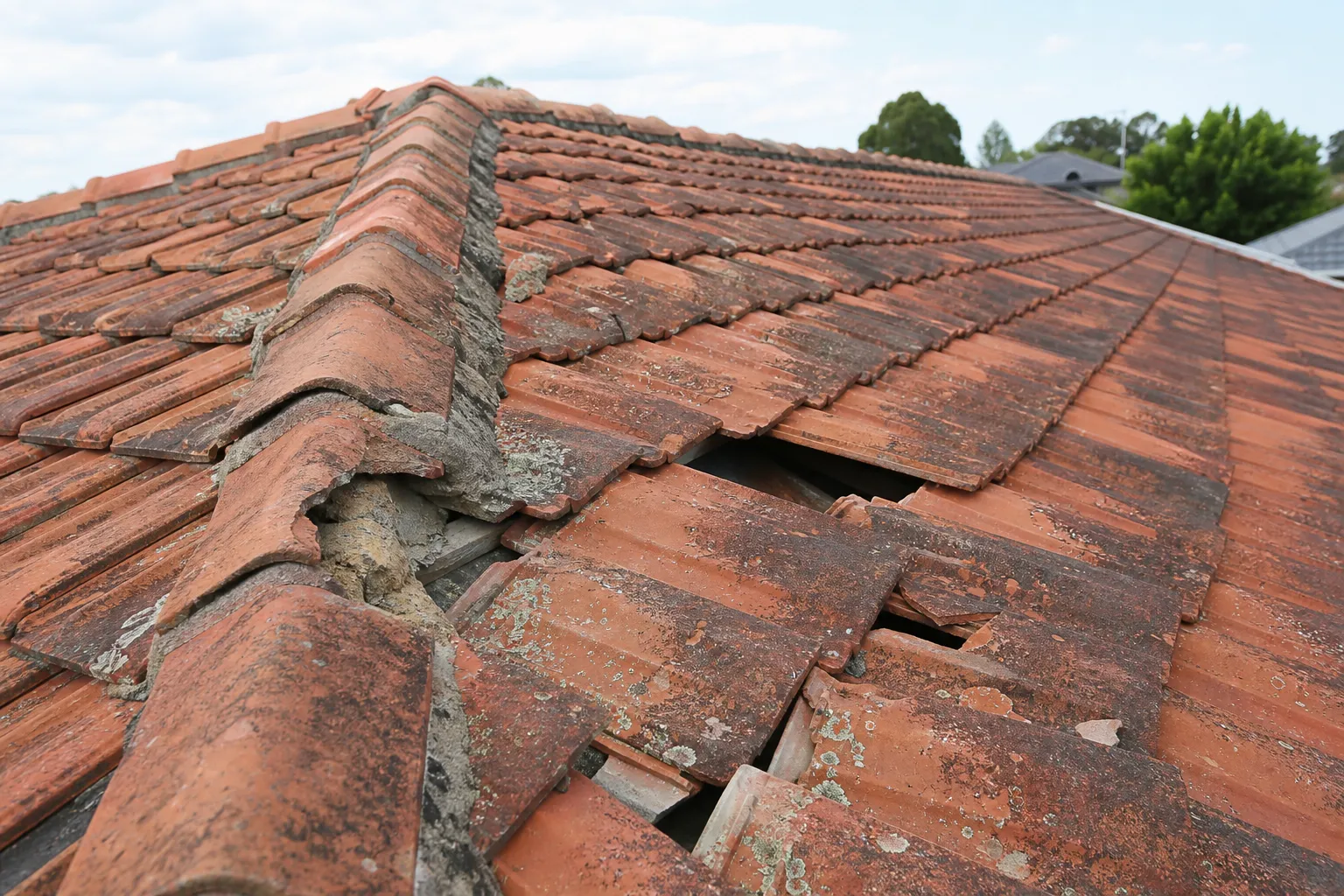
If you own one of the interwar or postwar brick-and-tile homes that fill the streets of Preston, Reservoir and Coburg, there's a good chance your terracotta roof has been quietly doing its job for the better part of a century. Terracotta is one of the most durable roofing materials ever laid on a Melbourne home, but the tiles are only half the story. The mortar that beds and points the ridges, the surface glaze, and the joints all age on their own timeline, and they usually start asking for attention decades before the tiles themselves fail.
The tricky part is that terracotta rarely fails dramatically. It declines slowly, and the early signs are easy to miss from the footpath. Here's what to look for, what Melbourne's climate is doing up there, and how to tell when a roof restoration is still the sensible call versus when full replacement is the more honest answer.
How old is your terracotta roof, really?
Well-made terracotta tiles can last 80 to 100 years or more, and many of the roofs on Preston and Coburg bungalows are original to the house. But the cement-based bedding and pointing mortar that holds the ridge and hip lines together does not last nearly that long. Original lime or cement mortar typically has a serviceable life of a few decades before it begins to shrink, crack and crumble. So a 90-year-old roof may have perfectly sound tiles sitting on bedding that is well past its use-by date. That gap between tile life and mortar life is exactly why restoration exists, and why it's usually needed more than once over a roof's lifetime.
The early warning signs to look for
Fretting or crumbling ridge mortar
This is the single most common problem we see on ageing terracotta roofs across the northern suburbs. Look along the ridge caps and hip lines: the raised joints running along the peaks of the roof. If you can see cracked, powdery or missing mortar, gaps opening beneath the caps, or fine debris collecting in the gutters below those lines, the pointing is fretting. Once mortar lets go, ridge caps can loosen and shift in wind, and water finds its way underneath. This is the classic trigger for re-bedding and repointing, and it's very treatable when caught early.
Cracked, chipped or slipped tiles
Individual cracked or broken tiles are normal on a roof of this age, from decades of foot traffic, fallen branches, hail and general weathering. A handful of damaged tiles is a repair job, not a crisis. What matters is the pattern: if you're seeing broken tiles across multiple areas, tiles that have slipped out of line, or pieces of terracotta in the garden beds, the roof is telling you the whole covering needs a proper going-over rather than another patch.
Moss, lichen and algae on the shaded faces
South-facing pitches and sections shaded by the mature street trees common through Reservoir and Northcote hold moisture for longer, and that's where moss, lichen and black algae take hold. It's more than cosmetic. Living growth traps water against the tile surface, works into joints, and lifts and holds moisture where you least want it. Heavy moss also adds weight and can block the natural drainage channels between tiles. Cleaning and de-mossing is a core part of any restoration.
Faded, porous or flaking surfaces
Original terracotta often had a fired surface finish that has long since weathered away, leaving the tile body exposed. As the surface becomes porous, tiles soak up more water, dry more slowly and become more vulnerable to frost damage and further growth. Patchy colour, a chalky look, or a surface that darkens noticeably after rain and stays damp are all signs the tiles are drinking in water they used to shed.
Damp spots, ceiling stains and gritty gutters
Brown rings on a ceiling, flaking paint in a top-floor room, or a musty smell in the roof space are the signs that water is already getting in. By this stage the problem has usually been developing for a while. Grit and sandy sediment building up in the gutters is another quiet tell. It's often the remains of deteriorating mortar and tile surface washing down off the roof.
What Melbourne's weather does to ageing terracotta
Our northern-suburbs climate is unusually hard on old roofs precisely because it swings so much. Hot, dry summers bake the tiles and draw moisture out of the bedding mortar; sharp cold snaps and the frost that settles on the elevated streets around Bundoora and Greensborough put the joints through constant expansion and contraction. That freeze-and-bake cycle is what cracks tired mortar and opens up the joints.
Then there's the water. Sudden downpours and the occasional hailstorm test every weak point at once, driving rain under loosened ridge caps and into porous tiles. Add the heavy leaf litter from the north's deciduous street trees, and gutters and valleys clog, water backs up under the tiles, and the cycle accelerates. None of this means terracotta is a poor choice (it's a superb material for our climate), but an ageing roof does need periodic maintenance to keep doing its job. Keeping gutters and valleys clear is one of the simplest ways to slow the decline.
Restoration or replacement: the honest answer
Here's the part most homeowners actually want to know. In the large majority of cases we see on Preston, Reservoir and Coburg homes, restoration is the right call. If the tiles themselves are structurally sound and only a manageable proportion are cracked, the problem is almost always the mortar, the growth and the tired surface, all of which a restoration addresses. Restoring an existing terracotta roof also keeps the character of a mid-century home intact, and it costs a fraction of what a full replacement does.
A restoration typically means replacing broken tiles, a thorough clean and de-moss, re-bedding and repointing the ridges and hips, and, where appropriate, a protective coating to seal and refresh the surface. Because sound terracotta can be reused, you're renewing what's already there rather than starting over.
There are honest limits, though. When a large share of tiles are cracked or spalling, when the tile profile is obsolete and matching replacements simply can't be sourced, or when there's widespread failure of the underlying battens or structure, restoration becomes a patch on a roof that will keep costing you. In those cases we'll tell you plainly that roof replacement is the better long-term value, rather than take your money for a restoration that won't hold. The only reliable way to know which side of the line your roof sits on is to have someone get up there and look.
Not sure which signs you're seeing?
Most of these signs are hard to judge accurately from the ground, and guessing wrong in either direction is expensive. A proper roof inspection (on the roof, with photos and a written verdict) will tell you whether you're looking at a few repairs, a full restoration, or a roof genuinely nearing the end of its life. We work across Melbourne's northern suburbs, including Preston, Reservoir and Coburg, and we're happy to give you a straight assessment and a free, no-pressure quote.
Frequently asked questions
How long does a terracotta roof last?
The tiles themselves can last 80 to 100 years or more, which is why so many original roofs are still in service across the north. The bedding and pointing mortar has a much shorter life, so most terracotta roofs need restoration work well before the tiles are ever a concern.
How often should a terracotta roof be restored?
There's no fixed schedule, but a well-kept terracotta roof generally benefits from restoration attention every couple of decades, sooner if the mortar is fretting, moss has taken hold, or the surface has become porous. Regular gutter clearing and prompt repairs stretch the interval considerably.
Can you walk on an old terracotta roof?
Aged terracotta is brittle and cracks easily underfoot, so it's not something to inspect yourself. Careless foot traffic is a common cause of the very cracked tiles you'd be trying to assess. Leave the on-roof inspection to someone who knows how to move on the tiles safely.
Seeing one or two of these signs on your own roof? It's rarely an emergency, but it is worth acting on before small problems become leaks. Get in touch for an honest look and a clear recommendation.