Roofing Services in Bundoora, Watsonia & Greensborough

The suburbs along the Plenty Road corridor — Bundoora, Watsonia and Greensborough — form Melbourne's 1960s–70s concrete tile belt. The homes here were built in a concentrated period of suburban expansion, which means a large number of roofs of similar age reaching similar maintenance milestones simultaneously. Many of these roofs are on their first or second restoration cycle; the concrete tiles are typically sound but the surface has carbonated and the ridge mortar has long since hardened and cracked. We do significant work across this corridor every year.

  • 🛡️ 10-Year Written Warranty*
  • ✅ Fully Insured
  • 📍 Northern Suburbs Specialists

Roofing Realities in Bundoora, Watsonia & Greensborough

  • Concrete tile porosity — 60-year-old cement tiles absorb significantly more water than new product, requiring specific primer systems
  • Elevated areas create frost exposure — streets on the ridge above Plenty Road experience harder frosts than the valley floor
  • Ridge mortar of the 1960s–70s era is now universally at end of life — widespread repointing demand
  • First-restoration-cycle homeowners — many haven't had roof work before and need clear, honest advice
  • Tree drop from native and introduced species in established backyards

The 1960s–70s concrete tile — what decades of Melbourne weather does to it

Concrete tiles installed in the 1960s and 70s were made to a different standard than modern product — many were produced with a relatively high water-to-cement ratio that makes them more porous than modern concrete tile. Over 50–60 years, the surface carbonation process has progressed through the full depth of many tiles, leaving a chalky, absorbent surface that is ideal for moss and lichen colonisation. The ridge mortar — also a 1960s–70s original cement mix — has been subjected to 50+ Melbourne winters of freeze-thaw cycling and is typically either visibly crumbling or has developed through-cracks that let water behind the cap. The critical preparation for a Bundoora or Watsonia concrete tile restoration is thorough pressure cleaning (to remove carbonated surface layer and moss), a penetrating concrete tile primer (not a standard terracotta primer), and a breathable elastomeric topcoat. Get the primer specification wrong and the coating lifts within 3–5 years.

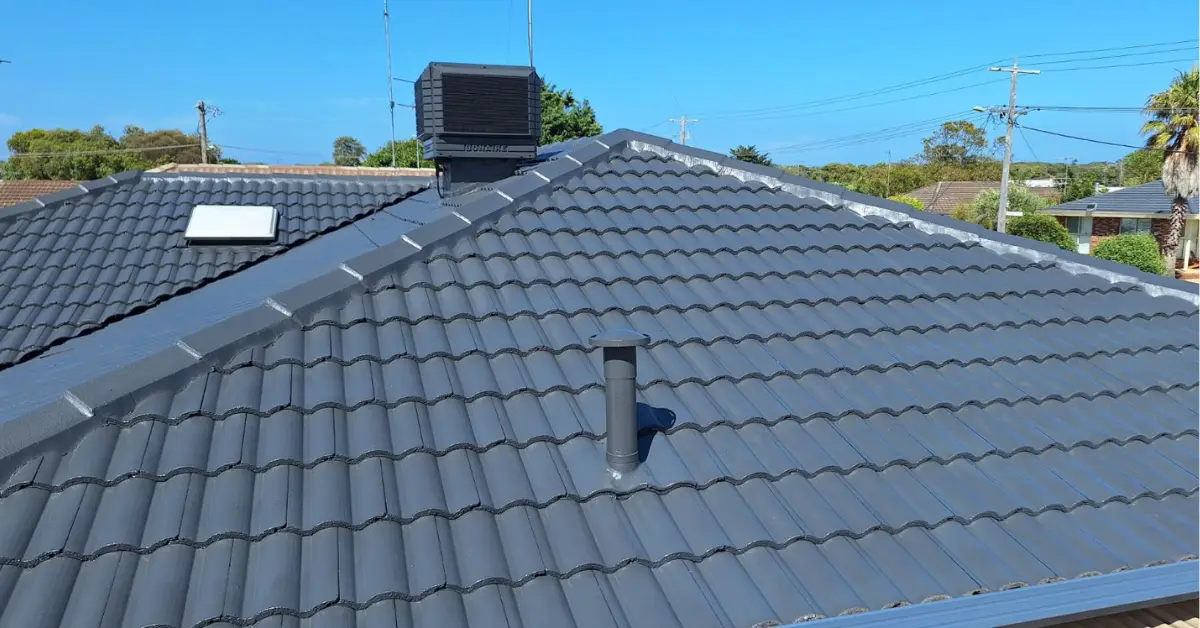
Concrete tile roof restored and recoated — roofing work in Bundoora, Watsonia & Greensborough, Melbourne VIC
Concrete tile roof restored and recoated — recent work near Bundoora, Watsonia & Greensborough
📋 Bundoora, Watsonia & Greensborough roof profile at a glance
Primary housing era
1960s–1970s suburban expansion era
Common roof type
Concrete tile — flat and low-profile styles dominant
Restoration cycle
Many on first full restoration; some already on second
Ridge mortar status
Virtually universal cement mortar failure — repointing widely needed
🔧 Roofing services in Bundoora, Watsonia & Greensborough
Roof Restoration
The core service — concrete tile cleaning, prime and coat
Ridge Repointing
Universal need — 1960s cement mortar has failed across the area
Tile Replacement
Some areas had softer concrete tiles — individual cracked tiles replaced
Gutter Maintenance
Established gardens generate leaf fall across the concrete tile belt

Bundoora, Watsonia & Greensborough Roofing Questions

How is restoring a 1960s concrete tile roof different from terracotta?

The key difference is the primer. Concrete tiles are more porous than terracotta and have a carbonated surface that resists adhesion if not prepared correctly. A concrete-tile-specific penetrating primer must be applied before any topcoat. Using a terracotta primer or skipping the primer entirely is the most common reason cheap concrete tile paint jobs fail within a few years.

My Bundoora home has never had roof work done — what do I expect?

If it's a 1960s–70s home that's genuinely never been touched, expect the inspection to find: crumbling ridge mortar, moss and lichen on south-facing pitches, and a tile surface that needs a thorough clean before any coating. The good news is that 1960s concrete tiles are often structurally sound under the weathered surface — they're excellent restoration candidates even after 50+ years.

Are the elevated streets of Greensborough colder? Does that affect the roof?

Yes. The higher streets of Greensborough sit above the frost pocket of the Plenty Valley and experience harder frosts than the valley floor. This accelerates ridge mortar cracking through the freeze-thaw mechanism. Flexible polymer repointing mortar — which accommodates thermal movement — holds up significantly better in these conditions than a standard cement mix.

Need a roofer in Bundoora, Watsonia & Greensborough?

Free inspection, photos of what we find, and a fixed written quote. Call (03) 9498 1000 or use the form — your local northern suburbs roofer.

GET YOUR FREE
ROOF INSPECTION & QUOTE

No obligation. Fast and reliable. 100% free.

  • ✅ Fast Response
  • ✅ Local Experts
  • ✅ No Obligation

Prefer to talk? Call (03) 9498 1000

📞 Call NowFree Quote →