
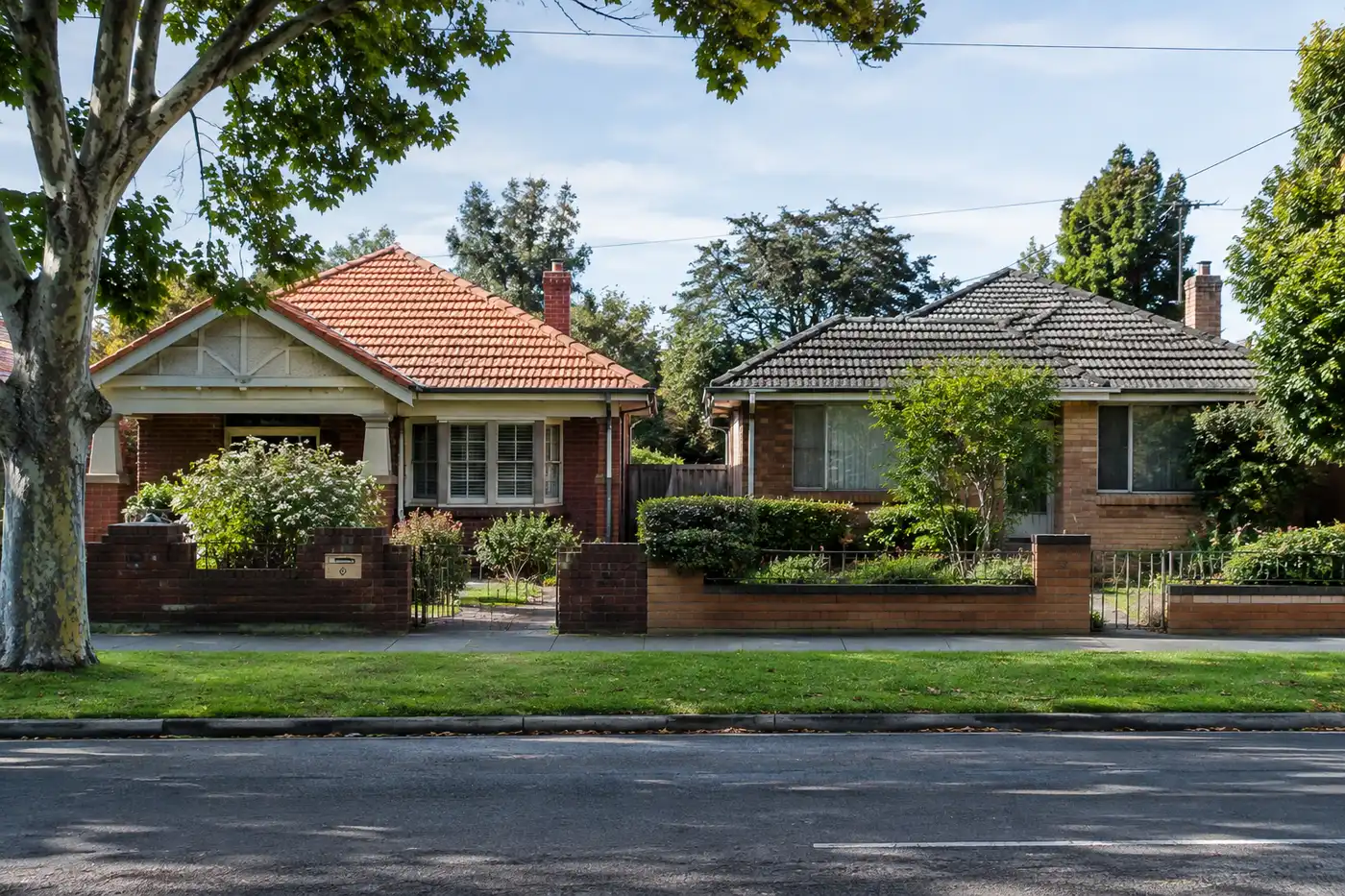
A lot of our phone calls start the same way. Someone has just bought a place in Reservoir or Watsonia, the building report says "tile roof, some deterioration", and they want to know what they've got themselves into. Our first question back is nearly always: which tiles? Concrete vs terracotta roof tiles age differently, break differently and get restored differently. Knowing which one is over your head changes what the next ten years of that roof look like.
Melbourne's north is a good place to learn the difference, because we have plenty of both. The interwar Californian bungalows across Preston, Coburg and Reservoir mostly wear terracotta, and a lot of those roofs are now 80 to 100 years old. Head up Plenty Road to Bundoora, Watsonia and Greensborough and you're in concrete tile country, built through the 1960s and 70s. Out in Mill Park and South Morang, the 1980s to 2000s estates are mostly concrete too.
You can usually tell them apart from the footpath
Terracotta is fired clay. It's the classic orange, red or deep brown tile, fairly thin at the bottom edge, with a smooth face. Some terracotta is glazed, which gives it a slight shine. Older unglazed tiles look flat and matt, a bit like a flowerpot.
Concrete tiles are made from cement and sand. They look chunkier, with a thicker leading edge, and the colour is a surface layer rather than part of the tile. On an old concrete roof you'll often see that layer worn thin, with grey showing through and a chalky, slightly furry look where moss has moved in.
The easiest giveaway is a broken piece. If a chip ever turns up in the gutter or the garden bed, look at the snapped edge. Terracotta is the same colour all the way through. Concrete is grey inside, whatever colour the top was. Please don't climb up to check, though. Old tiles crack underfoot and a mossy roof is slippery in a way that catches people out.
Terracotta keeps its colour. Concrete depends on its coating.
This is the biggest practical difference, and it drives almost everything else.
The colour in terracotta is baked into the clay, so it doesn't fade the way paint does. A good glazed terracotta roof sheds water well for a very long time. Its weak point comes with real age. Once the glaze wears through, or an unglazed tile turns porous, the clay starts soaking up water. Through a Melbourne winter that water sits in the tile, and eventually the face flakes or the tile cracks right through. That's the stage many of the oldest Preston and Coburg roofs are reaching now.
Concrete ages from the outside in. The factory coating wears away over the decades, and the exposed cement slowly reacts with the air and goes chalky and absorbent. Roofers call this carbonation. A carbonated surface holds moisture, which is exactly what moss and lichen want, so concrete roofs tend to go green and patchy on their shaded south faces much sooner. The upside is that the tile underneath is often still solid. A concrete roof that looks terrible from the street can be a very good candidate for restoring.
They fail in different ways, except at the ridge
Terracotta is the more brittle of the two. It doesn't like point pressure, so a careless boot, a ladder dropped against the edge or a heavy hailstone can crack a tile clean through. Once old terracotta has gone porous it also gets more fragile, which is one reason we're careful about where we step on those roofs.
Concrete is heavier and generally copes better with foot traffic. Its problems are slower: surfaces that erode and roughen, edges that crumble on softer older tiles, and the odd tile that has cracked over the years and let water in without anyone noticing.
Where the two are exactly alike is the ridge. On both types, the ridge caps along the top of the roof sit on a bed of mortar with a pointing layer over it. That mortar shrinks, cracks and crumbles with age, the caps start to move, and rain gets in underneath. On a tile roof of either kind, fixing the ridge (re-bedding the caps and repointing them) is usually the most important part of the job.
Restoring each one is a different job
This is where the tile type really matters, and where cheap quotes most often go wrong.
Concrete tiles: the primer makes or breaks it
A concrete restoration starts with a thorough pressure clean to strip off the moss and as much of the chalky carbonated layer as will come away. Cracked tiles get replaced, the ridges are re-bedded and repointed, and then the roof is coated. The step that matters most is the primer. Concrete is more porous than terracotta, so it needs a penetrating primer made specifically for concrete tile before any topcoat goes on. Skip that, or use the wrong product, and the coating has nothing solid to hold onto. When you're comparing quotes on a concrete roof, check that the primer is actually named in writing.
Terracotta tiles: often it doesn't need paint at all
This one surprises people. A glazed terracotta roof in decent shape usually doesn't need to be coated. The glaze is already doing the waterproofing, and a coating needs something to grip, which a sound glaze doesn't offer. For those roofs, a restoration is mostly a careful clean, replacing broken tiles, and re-bedding and repointing the ridges and hips. You keep the natural colour.
Unglazed or weathered terracotta is different. Once the surface has gone porous, sealing or coating it can help it shed water again, and some owners take the chance to change the colour. If your home is in a heritage overlay, as parts of Brunswick and Northcote are, check what the council allows before changing how the roof looks. If you're not sure which stage your roof is at, our guide to the warning signs on an ageing terracotta roof walks through what to look for from the ground.
Either way, the process should be built around your tiles, not a standard recipe. Our concrete and terracotta roof restorations start with an on-roof inspection so the quote reflects what the tiles actually need.
Re-roofing puts a different question on the table
Everything above assumes you're keeping the roof you have. If the tiles are genuinely finished, and you're choosing a new roof, the comparison changes.
New concrete tiles usually cost less to supply than terracotta and come in a wide range of colours and profiles. New terracotta costs more but holds its colour for life, and it tends to suit period homes better, which can matter in heritage streets. Both are heavy compared with metal, so the condition of your roof frame is part of the decision. If you're weighing tiles against a metal roof, our side by side look at Colorbond and tile covers weight, noise and storm performance.
One practical note for anyone just replacing a handful of broken tiles: matching can take some hunting. Many older terracotta and concrete profiles were discontinued decades ago, so a good tiler will look for a close match rather than drop in whatever is on the truck.
So which is better? The one you have, usually
For a new roof, terracotta is the longer lasting, better looking option and concrete is the more affordable one. That's the honest short version.
For an existing roof, it's the wrong question. Most of the tile roofs we look at across the north, concrete or terracotta, are sound enough to restore rather than replace, and restoring is the cheaper path by a long way. What matters is that the work matches the tile: the right primer on concrete, a light touch on good glazed terracotta, and a proper job on the ridges for both. Our restorations and replacements come with a 10-year written guarantee on workmanship and materials (conditions apply).
If you'd like to know which tiles you've got and what they actually need, we'll come out and have a look. Inspections and quotes are free, and you'll get photos of what we found. Call us on (03) 9498 1000 or book a free tile roof inspection and quote.