
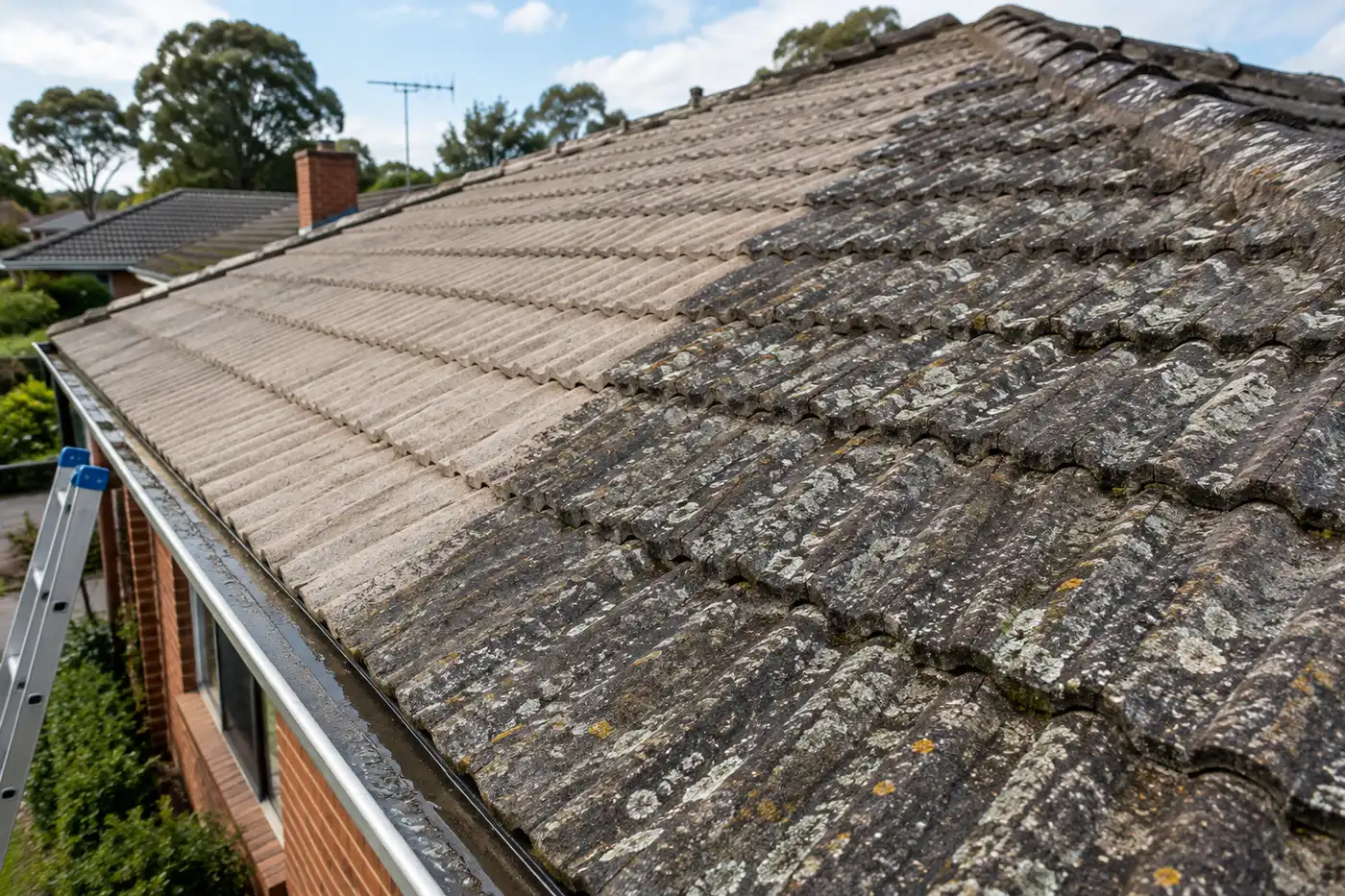
Most springs we get a handful of calls that start the same way. Someone has spent a weekend watching videos, priced up a pressure cleaner and a few drums of roof paint, and now they want a straight answer: could they just do the roof themselves? It's a fair question, and we'd rather give you an honest view on DIY roof restoration than a sales pitch. Some of it is realistic for a handy owner. A good part of it isn't, and the reasons aren't always the ones people expect.
A restoration is several jobs stacked together, not one coat of paint
From the street, a restored roof looks like a painted roof. That's where most of the DIY confusion starts. The paint is the last and arguably easiest part. Everything underneath it is what decides whether the roof stops leaking and how long the finish lasts.
On a typical tile roof in the northern suburbs, a full restoration covers:
- a close inspection, and swapping out cracked or broken tiles
- a deep clean to strip moss, lichen and loose material
- rebedding loose ridge caps and repointing them with flexible compound
- checking flashings and valleys, the metal channels and strips where roof faces meet walls or each other
- priming or sealing the tiles so the coating actually grips
- the finish coats themselves
Each of those is its own skill. The cleaning has to be strong enough to lift years of growth but not so hard it damages the tile surface. The pointing has to bond to sound bedding, or it lets go again within a couple of years. And none of the coating matters if a cracked tile or a rusted valley is still letting water in underneath it.
The fall is the real risk, and it's bigger than it looks from the ground
We'll say this plainly because it matters more than anything else in this post. Most of the danger in a DIY roof job comes from being on the roof at all. A tile roof that's damp with dew, slick with moss or covered in wet primer is a very different surface to the one you see from the driveway. A double storey home or a steep pitch raises the stakes again.
Old tiles add another problem. The interwar bungalows through Preston, Coburg and Reservoir carry terracotta roofs that are now 80 to 100 years old. Those tiles can crack under a misplaced foot, which means a DIY job can create new leaks while you're trying to fix the old ones. Knowing where to step, and where not to, comes from years of walking roofs.
Some of the work isn't legally yours to do in Victoria
This one catches people out. Work on flashings, valleys, gutters and downpipes is classed as roof plumbing, and in Victoria that has to be done by a licensed or registered plumber. So even a confident DIYer can only ever do part of a full restoration properly. The flashings and valleys are also where a lot of old roofs leak first, so skipping them often means skipping the actual fix.
Older homes carry one more caution. If any part of your roof or eaves is old cement sheet, have it checked before anyone pressure cleans, cuts or drills it. Disturbing asbestos is not a risk worth taking to save on a quote.
Where DIY roof jobs usually go wrong
We get called to fix DIY attempts often enough to see the same patterns. The most common is cleaning too aggressively. A pressure cleaner held too close strips the surface off tiles and drives water up under the laps, and we've covered why pressure washing a roof can backfire in more detail elsewhere.
Next is painting over problems instead of fixing them. Fresh coating over fretting ridge mortar or a cracked tile looks great for a season. Then the leak comes back, now hidden under a nice new colour. Coating straight over rust on a metal roof does much the same thing.
Then there's the preparation and the weather. Concrete tiles are porous, so they need sealing first or the topcoat soaks in patchily and peels. Paint applied while the roof is still damp, or with rain coming, can fail before it has properly cured. Melbourne's weather doesn't give you many guaranteed dry weekends in a row, and a part finished roof is not where you want to be when it turns.
Does doing it yourself actually save money?
Sometimes it saves a bit. Often it saves less than people hope. Once you add equipment hire, the right primers and sealers, safety gear, replacement tiles and several weekends of your own time, the gap narrows. If the job then needs redoing, the saving disappears completely.
There's also the question of who stands behind the work. When you do it yourself, nobody does. Our restorations come with a 10-year written guarantee on workmanship and materials (conditions apply), and the quote is based on the actual condition of your roof after an inspection. If you want to compare properly, it helps to know what a professional roof restoration costs in Melbourne's north and what pushes that number up or down.
The prep work is what most owners underestimate, and it's what customers tend to notice when it's done well. One of our clients, Tristan Smith, put it this way: "Ian did a fantastic job onsite with cleaning, priming and painting. Went above and beyond quoted work." If you'd like to see what goes into each stage, our page on professional tile and metal roof restoration walks through the full job.
What you can sensibly do yourself, from the ground
None of this means you should ignore the roof until a roofer turns up. There's plenty a homeowner can do without climbing a ladder, and it genuinely helps.
Walk around the house after a big storm and look along the ridge lines for gaps or caps that have shifted. Notice if sandy grit from old mortar is building up in the gutters or on the paths. Check the ceilings, especially near the corners and under hips, for new stains after heavy rain. Take photos each time so you can see what has changed. On shaded south facing pitches, watch how fast moss is spreading, because it holds moisture against the tiles and the pointing.
That kind of record is useful when you do get someone up there. It also helps you judge whether the roof needs a full restoration at all, or just a targeted repair to the caps or a few broken tiles.
Get a free look before you buy the paint
If you're weighing up whether to tackle it yourself, a proper inspection first costs you nothing and tells you what the roof actually needs. We offer free inspections and quotes across Melbourne's northern suburbs, with photos and a straight answer on whether it's a restoration, a repair or something you can leave for now. Call us on (03) 9498 1000, or book through our roof restoration team and we'll take it from there.