
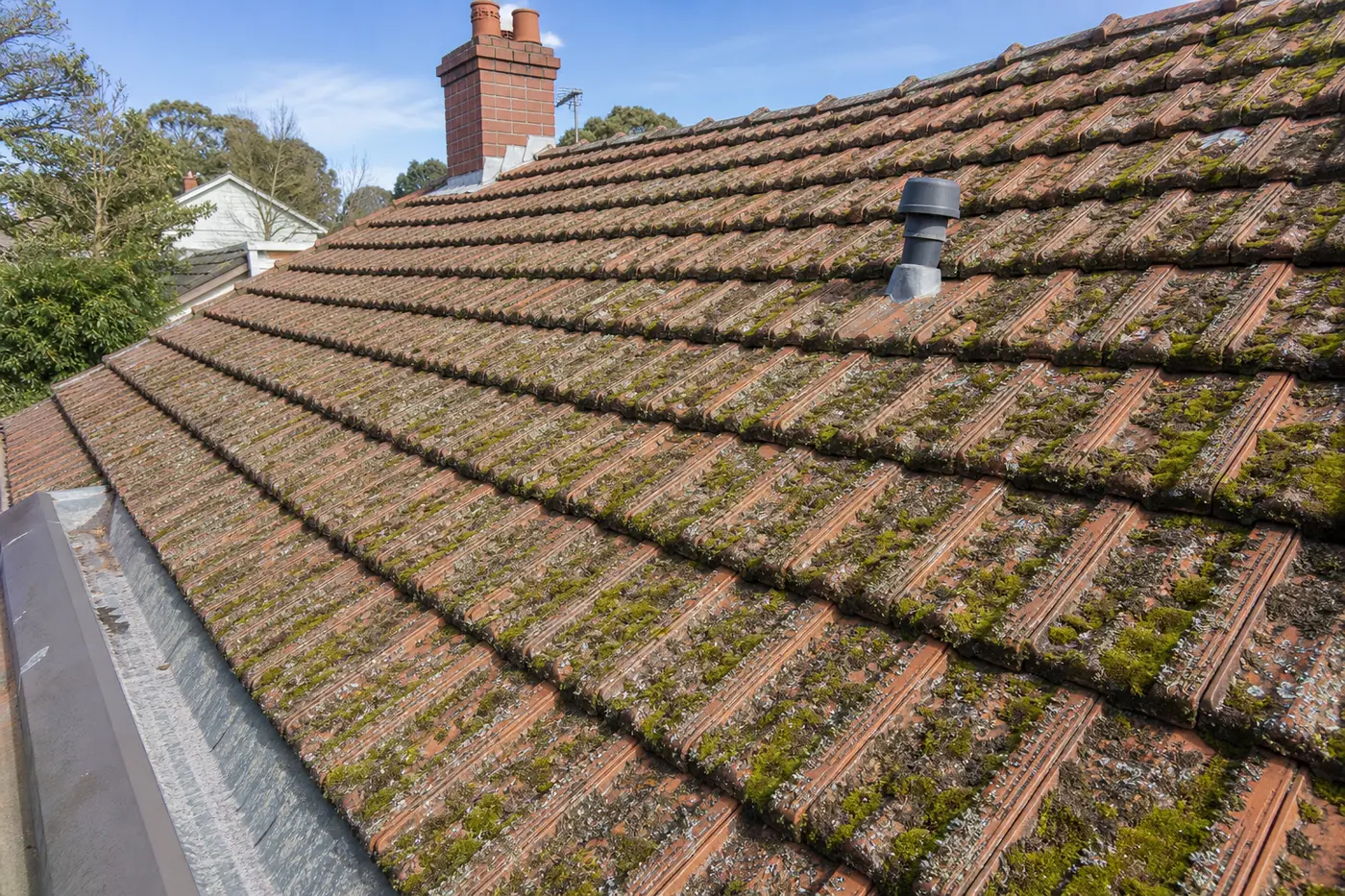
You back the car out one morning, look up, and the roof has gone green. Sometimes it is black, sometimes a patchy grey that crept in over a couple of winters. It almost always starts on the shaded side, and by the time most people really notice it, the moss has a proper hold. Roof cleaning in Melbourne is one of the more common reasons homeowners call us through the cooler months, and moss, lichen and algae are behind most of those calls.
Here is the honest version. A green roof is not just a tidiness problem. Left long enough, moss can shorten the life of your tiles and quietly set up the conditions for a leak. This is what is actually going on up there, and what a proper clean does about it.
Why a roof goes green, and why it is usually the south side
Moss, lichen and algae need three things: moisture, shade and something to cling to. The southern pitch of a roof gets the least sun, so it stays damp longer after rain and dew. That is why you so often see one side of a roof covered and the other side almost clear.
Melbourne's north gives these plants plenty to work with. The older terracotta roofs around Preston, Coburg and Reservoir have a naturally porous surface once the original glaze has worn thin, and moss roots love it. The 1960s and 70s concrete-tile streets through Bundoora, Watsonia and Greensborough sit up higher and hold the cold, so the tiles and pointing stay damp for longer. And anywhere under a mature tree canopy, think the leafier parts of Ivanhoe, Heidelberg, Northcote and Thornbury, you get constant shade plus a steady drop of leaf litter that feeds the whole process.
Moss does more damage than people expect
The green is the part you can see. The trouble is what it does while it sits there.
Moss holds water against the roof like a sponge. On terracotta and concrete tiles, that constant moisture works into the surface and speeds up the breakdown of the tile and the bedding mortar underneath. In the colder, higher suburbs it is worse again, because water that soaks in and then freezes overnight expands and cracks things from the inside.
Then there is the physical side. Thick moss and lichen creep under the overlap of tiles and can lift them slightly out of line. Clumps break off and wash down into the valleys and gutters, where they build up and stop water draining the way it should. A blocked valley in a heavy Melbourne downpour is one of the more common ways water ends up inside a ceiling rather than out on the ground. So while moss rarely punches a hole by itself, it sets the table for the leak.
Why blasting it with a pressure washer is the wrong first move
This one surprises people. Reaching for the highest-pressure washer you can hire feels like the obvious fix, and it is usually a mistake.
A high-pressure jet aimed at an older roof can strip what is left of the tile's protective surface, blow out cracked or loose pointing, and drive water up under the tiles and into the roof space. On a painted or coated roof it can peel the coating straight off. It is also genuinely dangerous work. A wet, mossy, pitched roof is slippery, and people are badly hurt every year falling off them. This is not a job to learn on a Saturday.
The better approach is gentler and slower. Most established moss and lichen is treated first so it dies off at the root, then cleaned down at a controlled pressure that lifts the growth without wrecking the surface underneath. Getting the method right for your particular roof, whether terracotta, concrete or metal, matters more than raw force.
What roof cleaning actually looks like when we do it
We start on the roof, not with a hose. Someone gets up there, clears the loose debris out of the valleys and gutters, and has a proper look at the condition of the tiles, the ridge capping and the pointing. That inspection tells us whether the roof just needs a clean or whether the cleaning is really step one of a bigger fix.
From there the moss removal itself means treating the growth, washing the roof down at the right pressure, and clearing everything that comes off it out of the gutters so it does not just wash into a downpipe and block it. On a lot of the roofs we see, cleaning is the first stage of a full roof restoration, where the roof is cleaned, re-bedded and repointed, then sealed with a protective coating that also makes it much harder for moss to take hold again. A clean on its own buys you time and looks great. A restoration resets the clock.
When a clean is not enough on its own
Sometimes we get up there and the moss turns out to be the least of it. If the ridge mortar is crumbling, if tiles are cracked or drummy, or if the surface has gone so porous that it drinks up water, cleaning alone will not stop the deterioration. The roof will look better for a season and then green up faster than before, because that porous surface is exactly what moss wants.
That is worth knowing before you spend anything. If you are not sure which camp your roof is in, the signs a terracotta roof needs restoring are a good gut check, and our rundown of what a roof restoration costs in Melbourne gives you a realistic sense of the numbers before anyone climbs a ladder.
Get a look before the next wet spell
If your roof has gone green, the cheapest time to deal with it is now, not after a valley overflows into the lounge room. We offer free inspections and quotes across Melbourne's northern suburbs, and every roof restoration and replacement we do carries a 10-year written guarantee on workmanship and materials. Give us a call on (03) 9498 1000 and we will take a proper look before the next wet spell settles in.