
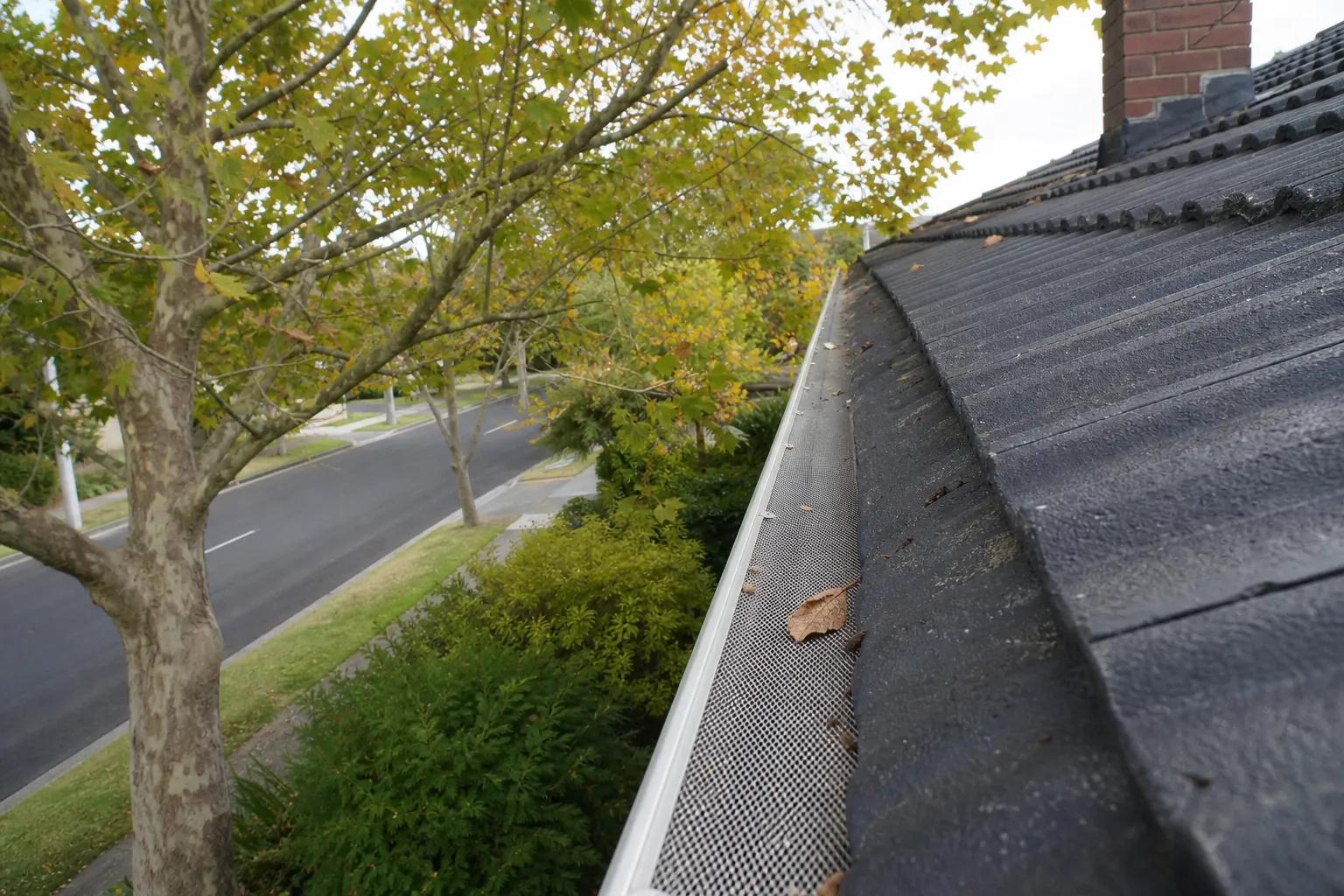
If you find yourself up a ladder every autumn scooping wet leaves out of the gutters, you have probably wondered whether gutter guard would put an end to the ritual. It is one of the most common questions we get in the leafier parts of Melbourne's north, and the honest answer is: it depends on your home. For some houses it is money very well spent. For others it solves a problem they do not really have. Here is a straight run through what gutter guard actually does, where it earns its keep around here, and what it costs, so you can decide whether it is right for your roof.
Is gutter guard worth it, in one sentence?
For a home under heavy tree cover, yes, quality gutter guard usually pays for itself in saved cleaning, avoided water damage and, in the bush-fringe suburbs, real fire protection. For a home in the open with barely a tree in sight, the case is much weaker. The single biggest factor is what is landing on your roof. If your gutters fill up two or three times a year and overflow every big downpour, guard changes your life. If they need a clean once every couple of years, you may be paying to fix something that is not really broken.
What gutter guard actually does
Gutter guard is a mesh or screen fitted over the gutter opening so leaves, twigs and debris stay out while water runs in. A good system does a few things at once:
- Cuts how often the gutters need clearing. It does not make them maintenance-free, but it turns a twice-a-year job into an occasional check.
- Stops overflow. Blocked gutters spill water down your walls, into eaves and back under the roof edge. Keeping them clear is the whole point.
- Keeps pests and birds out. A clogged, damp gutter is a favourite nesting spot. Mesh shuts that down.
- Reduces ember and fire risk. In bushfire-prone areas this is the big one, and I will come back to it below.
The reason overflow matters so much is that a gutter is the first line of defence for everything underneath it. When water backs up and finds its way in, you do not get a gutter problem, you get a roof and ceiling problem. We have written before about how a blocked gutter turns into a winter leak, and clogged gutters are behind a surprising share of the leaks we get called out to in July and August.
The honest downsides
I am not going to pretend gutter guard is perfect, because it is not, and the internet is full of people who felt sold a dream. A few things worth knowing before you commit.
It is not truly maintenance-free. Fine material still gets through, or washes down as grit off the roof, and over the years it can settle into a sludge in the bottom of the gutter. Guard slows this dramatically, but you should still have the roof and gutters looked over now and then. Cheap product is a false economy. Thin plastic and foam inserts warp, go brittle in our summer sun and break down within a few years, and once a poor guard is clogged it is actually harder to clean because you have to lift it off first. And it is not a small purchase, which is exactly why it is worth matching the system to the home rather than buying the cheapest option or the most expensive one by reflex.
The bushfire angle in Melbourne's north
This is where the decision gets a lot clearer for some homeowners. If you are on a treed block on the edge of the bush, dry leaf litter in the gutters is genuinely dangerous. During a bushfire the biggest threat to most homes is not the wall of flame, it is wind-blown embers landing well ahead of the fire, and a gutter packed with dry leaves is one of the easiest places for those embers to take hold. Eltham and the bush-fringe streets nearby have been assessed as very high bushfire risk, and for those homes gutter guard is less a convenience and more a sensible piece of ember protection.
If that describes your place, two things matter. First, choose a non-combustible guard: aluminium or steel mesh, not plastic. Second, look for a system that meets the Australian Standard for building in bushfire-prone areas (AS 3959) and is rated for your bushfire attack level. A guard that is right for a leafy inner-north street is not automatically right for a block backing onto reserve, so it pays to be specific about why you are installing it.
Which type of gutter guard is best?
There is no single best guard, only the best one for what is landing on your roof. The main options we see:
- Aluminium or steel mesh. The workhorse for most Melbourne homes. Durable, non-combustible, handles everything from gum leaves to jacaranda flowers, and the quality systems carry long manufacturer warranties. This is what we fit in most cases.
- Poly (plastic) mesh. Cheaper and fine for light leaf loads in a low-fire-risk area, but it will not last as long and it is not the choice anywhere near the bush.
- Foam and brush inserts. The budget end. They sit inside the gutter and catch debris on top, which sounds convenient until you try to clean them. Fine as a stopgap, not a long-term fix.
The other detail that matters more than the product itself is the mesh aperture, the size of the holes. Big gum leaves need a different gap than fine pine needles or the seed pods and blossom that come off deciduous street trees. Getting that wrong is how people end up with a guard that still clogs. Matching the mesh to your actual trees is half the job.
What does gutter guard cost in Melbourne?
As a general guide, quality mesh gutter guard installed in Melbourne tends to run somewhere around $35 to $85 per metre, which puts a typical single-storey home in the low thousands and a larger or two-storey place higher again. Those are market ranges, not our price list; the real figure depends on the length of guttering, the roof height and pitch, the type of mesh and how much access the job needs. A steep two-storey roof costs more to work on safely than a low single-storey one, same as any roof job.
Weigh that against what you are spending now. Regular professional gutter cleaning, a couple of times a year, adds up over a decade, and it does nothing for overflow damage or fire risk. For a heavily treed home the guard often works out cheaper over its life. For a home with little debris, the cleaning bill was small to begin with and the sums are closer.
So, do you actually need it?
Run through a quick gut check. Do you have large trees, gums or heavy deciduous species, hanging over or near the roof? Are you clearing the gutters more than once a year, or paying someone to? Do the gutters overflow in heavy rain? Are you on a bushfire-prone block? Is getting up on the roof yourself becoming a genuine hazard? The more of those that ring true, the stronger the case. If none of them do, keep your money and stick with the occasional clean.
When you are ready to get specific, the sensible move is to have someone get up on the roof, see what is actually collecting in your gutters and which trees are the culprits, then recommend the right mesh rather than a one-size-fits-all product. That look also flags anything else going on up there, like rusting gutters or tired valleys, that a guard alone will not fix. You can see how we approach gutter guard installation and gutter work across the northern suburbs, from the mature-tree streets of Ivanhoe and Northcote to the bush blocks around Eltham.
Frequently asked questions
What are the disadvantages of gutter guards?
The main ones are cost upfront, the fact that fine debris and grit can still build up over time so it is not fully maintenance-free, and that cheap plastic or foam products warp and clog and are then harder to clean than a bare gutter. A quality mesh system properly fitted avoids most of this, which is why the product and the install matter as much as the decision to fit guard at all.
How much does gutter guard cost per metre in Australia?
Quality installed mesh commonly falls in the range of roughly $35 to $85 per metre, depending on the material, the roof height and how tricky the access is. The only way to get a real number for your home is to have the guttering measured and the roof assessed, which is why we quote it free rather than guess over the phone.
Does gutter guard help with bushfire protection?
Yes, and in bushfire-prone areas it is one of the more worthwhile things you can do. Non-combustible metal mesh keeps dry leaf litter out of the gutters and helps stop wind-borne embers igniting there. If fire protection is your reason for fitting it, choose an aluminium or steel system rated to the relevant Australian Standard for your bushfire attack level.
Is gutter guard better than just cleaning the gutters?
For a home with heavy tree cover, guard usually wins over the long run because it reduces the cleaning, prevents overflow damage and adds fire protection. For a home with little debris, regular cleaning is cheap and may be all you need. It comes down to what lands on your roof and how often your gutters actually block.
Not sure whether gutter guard is worth it for your place? We will get up on the roof, tell you honestly whether guard makes sense for your home and your trees, and match the right mesh to the job. Book a free, no-pressure assessment for expert gutter and downpipe work right across Melbourne's northern suburbs.