You've had a leak, or the tiles look faded and blotchy from the street, and someone has quoted you for a brand new roof. It's a big number. Before you sign anything, the real question is whether your roof actually needs replacing at all, or whether a restoration would do the same job for a fraction of the outlay. That choice between roof restoration and replacement is one we talk through with homeowners across Melbourne's north most weeks, and the honest answer is that the roof itself tells you which way to go.
Here's how we work it out, so you can walk into any quote knowing what you're looking at.
What each one actually involves
These two words get thrown around like they're interchangeable. They aren't.
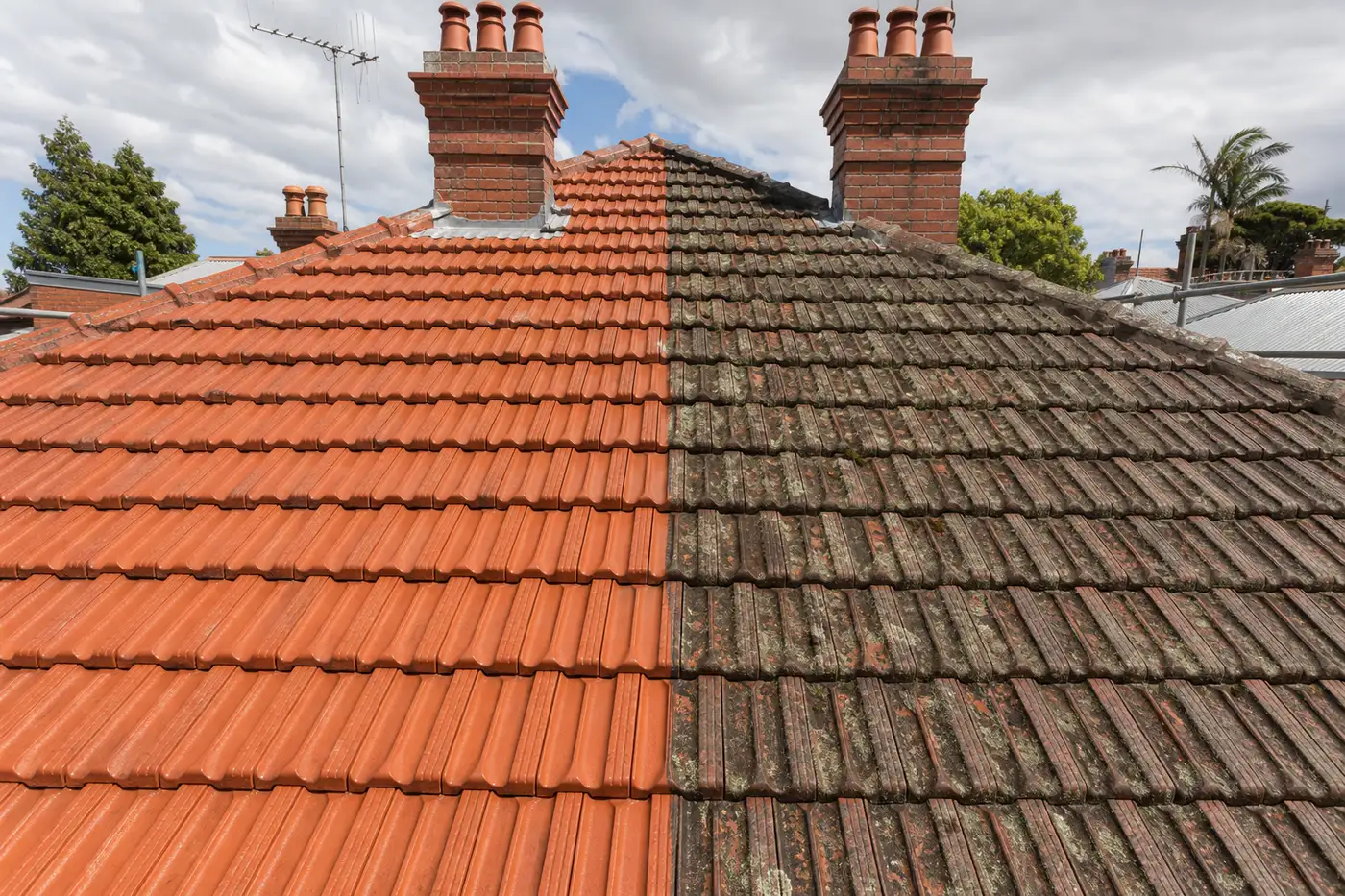
A restoration keeps your existing roof and brings it back to life. We give it a high-pressure clean to strip off moss, lichen and years of grime, replace any cracked or broken tiles, re-bed and repoint the ridge capping (the mortar line along the peaks and hips), then seal the lot with a primer and two coats of a protective coating. The structure stays. You keep the tiles you've got. What changes is that the roof is watertight and UV-protected again.
A replacement is exactly what it sounds like. The old roof comes off completely, down to the timber, and a new one goes on. New tiles or new metal sheeting, often new sarking and battens underneath. It's a much bigger job, it costs a lot more, and it takes longer. Sometimes it's absolutely the right thing to do. Most of the time, for the roofs we see, it isn't.
The one question that decides it
Strip away the marketing and it comes down to a single thing: is the roof structurally sound?
Not "does it look tired". Tired is easy to fix. What matters is whether the bones underneath are still doing their job. The tiles or sheets, the battens they sit on, the timber frame, the sarking. If those are intact and the roof is simply worn, faded and leaking at the usual weak points, it's a restoration candidate. If the structure itself has failed, no amount of cleaning and coating will save it, and that's when a new roof earns its cost.
The catch is you often can't tell from the ground. A roof can look rough and be perfectly restorable, or look fine from the footpath and be quietly rotting where the gutters meet the fascia. That's the whole reason we get up there and look properly before saying a word about which path suits.
When restoration is the right call (which is most of the time)
The bulk of the roofs we restore fall into a few familiar groups around here.
The interwar terracotta roofs on the Californian bungalows through Preston, Coburg and Reservoir are often 80 to 100 years old. People assume that age means replacement. It usually doesn't. Genuine terracotta is a remarkable material and the tiles themselves are frequently still sound. What's failed is the ridge mortar, which has cracked and started letting water in. Re-bed the ridges, swap the handful of broken tiles, seal the surface, and that roof has another long stretch of life in it. If you own one of these, it's worth reading through the early warning signs a tile roof is failing so you know what you're looking at.
The 1960s and 70s concrete-tile belt through Bundoora, Watsonia and Greensborough is hitting its first or second restoration cycle now. Concrete tiles lose their colour coating over time and go porous, which is why they look chalky and hold moss. That's a surface problem, not a structural one, and a restoration is exactly the fix.
Colorbond and metal roofs on the newer estates out Craigieburn and Mill Park way often just need a clean, a bit of rust treatment on early spots, and a recoat. Well short of a replacement.
In all of these, the roof is sound. It's the finish and the mortar that have worn out, and those are renewable. A restoration comes with our 10-year written guarantee on workmanship and materials, which tells you how much life we expect a properly restored roof to have left.
When you genuinely need a new roof
I'd be doing you no favours pretending every roof can be saved. Some can't, and pushing a restoration onto a roof that's past it just wastes your money. These are the situations where we'll tell you straight that a full roof replacement is the sensible call.
- Widespread tile failure, not the odd cracked one. When a large share of tiles are spalling, delaminating or crumbling, there's nothing left to coat.
- Failed battens or rotten roof timbers. If the structure holding the tiles up has gone, the covering has to come off to fix it.
- Serious sagging in the roof line, which points to structural movement underneath.
- Metal roofs rusted right through, where the sheeting has holes rather than surface rust. Once it's perforated, coating over it does nothing.
- An old asbestos-cement roof, which needs licensed removal and replacement rather than restoration.
If two or three of these are true at once, you're almost certainly looking at a replacement, and a restoration would be throwing good money after bad.
Where the money really lands
Cost is usually what's driving the question, so let's be plain about it. A restoration is far cheaper than a new roof, because you're paying for cleaning, repairs and coating rather than a full strip-and-rebuild plus disposal of the old material. For a roof that's structurally sound, it delivers most of the benefit for a small share of the price.
The trap is spending replacement money on a roof that only needed a restoration, or the reverse, nursing a genuinely dead roof through restoration after restoration when a new one would have been done with it. Matching the right work to the actual condition is the whole game. If you want the detail on numbers and what shifts them, we've laid out what a restoration actually costs in a separate piece.
How we help you decide without the sales pitch
You can't make this call properly from the ground, and neither can we. That's why the first step is always a proper look. We get up on the roof, photograph what we find, and give you an honest written verdict on whether it's a restoration job, a replacement job, or somewhere in between. If your roof is sound, we'll say so, and our roof restoration service will bring it back for a lot less than a rebuild. If it's genuinely finished, we'll tell you that too, rather than sell you a coating that won't last.
The inspection and quote are free, and there's no pressure either way. What you get is a clear answer to the question you actually came with: does this roof need saving, or replacing.
The short version
If your roof is structurally sound and simply worn, faded or leaking at the ridges, restoration is almost always the smarter spend. If the tiles, battens or timbers have genuinely failed, a replacement is the honest fix and worth the cost. The only way to know which camp your roof sits in is to have someone competent get up there and look. Book a free inspection and we'll tell you the truth about your roof, then you can decide with the facts in front of you. Give us a call on (03) 9498 1000 whenever suits.