
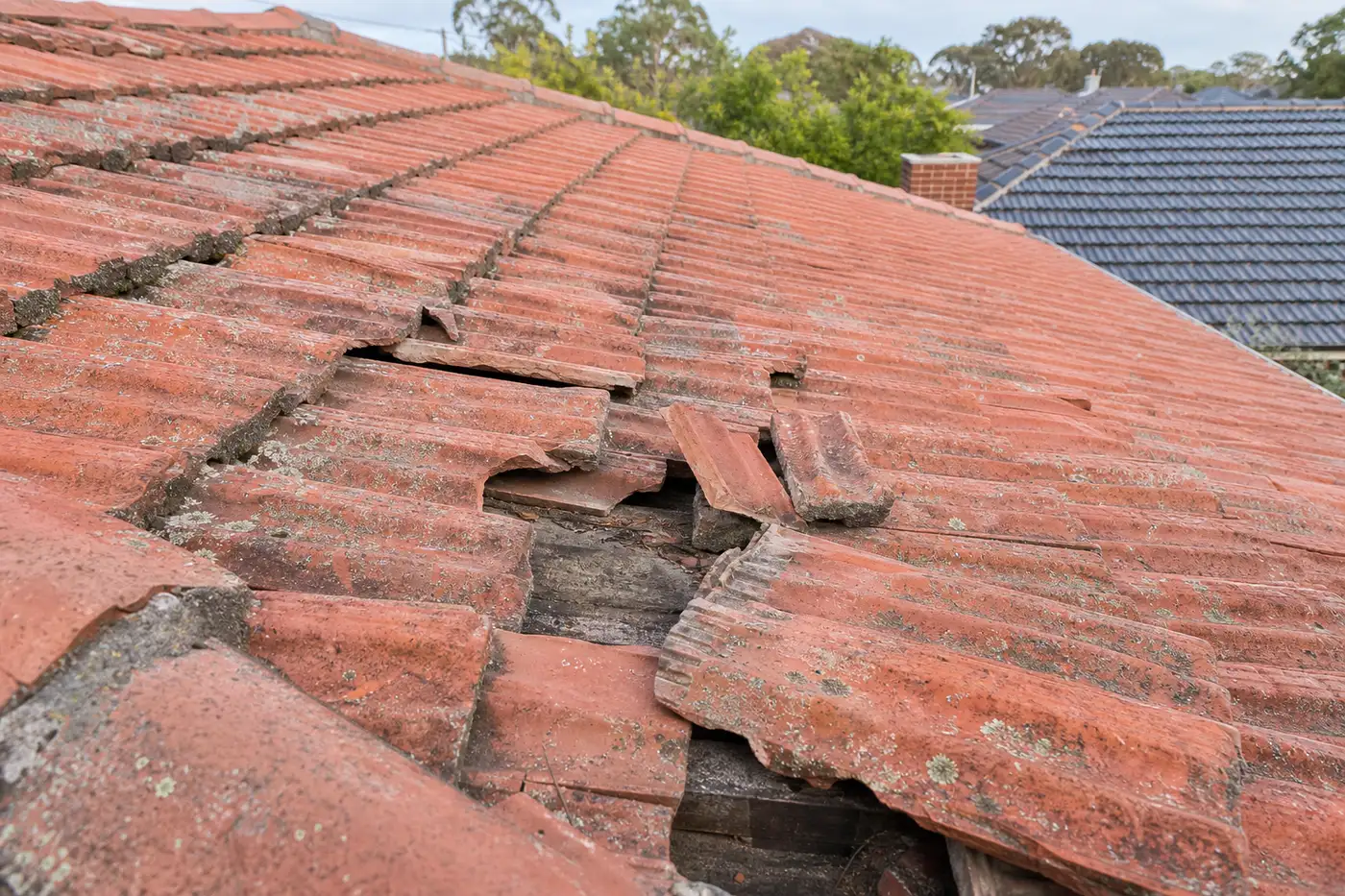
You come home after a rough night of wind and rain, look up, and there's a brown ring spreading across the ceiling. The first thought is the mess. The second, usually, is money. One of the most common questions we hear from homeowners across Preston, Reservoir and Coburg is whether home insurance covers roof leaks. The honest answer is that it can, but only in certain situations, and the reason a claim gets knocked back is nearly always the same one.
Here's how it actually works in plain terms, and what to do the day you spot water coming in.
It comes down to what caused the leak
Insurers draw a hard line between two things: sudden, accidental damage, and slow damage that built up over time. That single distinction decides most claims. A tile cracked by hail last Tuesday is a very different case, in an assessor's eyes, to mortar that has been crumbling quietly for fifteen years. Both let water in. Only one is usually covered.
So before you call anyone, the useful question is not "is my roof leaking" but "what made it start leaking now".
What a policy will usually pay for
Standard home and building policies are built to cover a leak that starts because of a specific, one-off event. In Melbourne's north the common ones are:
- Storm and heavy rain driving water in after high winds lift or crack tiles
- Hail damage, which the growth-corridor suburbs like Craigieburn, Mill Park and South Morang cop more of than most
- A tree or a large branch coming down on the roof, which is a real risk on the older, heavily treed streets around Eltham, Ivanhoe and Heidelberg
When one of these is the cause, insurers generally cover the resulting water damage too, so the ruined plaster, the ceiling, sometimes carpet or contents underneath. What people often miss is that the policy pays to put right the damage from an insured event. It is not a free roof upgrade, and that catches a lot of owners out.
What they will usually knock back
This is where most claims fall over. Insurers expect you to keep your roof in reasonable condition, and they will not pay for a leak caused by wear and tear or a lack of maintenance. In practice that means things like:
- Perished, cracked or slipped tiles that simply gave out with age
- Ridge capping mortar that has been fretting and dropping out for years
- Rusted flashings or valleys that were never replaced
- A slow leak that has clearly been happening for a long time before you claimed
None of that is dramatic enough to count as a sudden event, so the repair of the leak itself sits with you. If you want to understand how a leak gets traced back to one of these causes in the first place, we walk through it in our guide to tracing a winter roof leak back to its source.
Why an old roof makes a claim harder up north
A lot of the housing stock across the inner and middle north is old. Interwar bungalows in Preston, Coburg and Reservoir often carry terracotta tile roofs that are 80 to 100 years old, and the 1960s and 70s concrete-tile belt through Bundoora, Watsonia and Greensborough is well past middle age too.
An assessor knows this. When a roof at the end of its life leaks in a storm, the argument becomes whether the storm caused it or simply exposed a roof that was already failing. That grey area is exactly where claims get disputed. It is also why the condition of your roof before the storm matters as much as the storm itself.
What to do the day you find a leak
A few sensible steps in the first day or two make a real difference to how a claim goes, and to how much damage you end up with.
- Deal with the water first. Move furniture, get a bucket under the drip, and if a ceiling is bulging with trapped water, keep clear of it.
- Take photos and video before you clean up. Dated images of the damage and, if you can safely see it, the cause, are worth a great deal later.
- Do not climb onto a wet roof to inspect it yourself. A roof after a storm is genuinely dangerous, and a fall is far more expensive than any leak.
- Call your insurer early and read your policy's product disclosure statement so you know what you are actually covered for.
- Arrange a temporary make-safe if water is still coming in. Most insurers expect you to prevent further damage, and reasonable emergency work is often reimbursed.
Once the weather clears, the leak still has to be fixed properly. Whether or not a claim is paid, getting the source of the leak repaired is what stops the next downpour doing it all again.
Why a roofer's report helps your claim
Insurers deal in evidence, not opinions. A written report from a roofer that sets out what failed, whether it looks like storm damage or age, and what the repair involves gives an assessor something concrete to work with. It can be the difference between a claim that stalls and one that gets approved.
We offer free inspections and quotes, and the report from a proper roof inspection is exactly the kind of documentation that supports a claim. It also tells you honestly whether you are looking at a small repair or something bigger, before you commit to anything.
Repair, restore or replace after the claim
If the damage is contained, a targeted repair is usually the right call and the cheapest one. But when an assessor and a roofer both agree the roof was near the end anyway, it can be worth looking at a full restoration or, in some cases, replacement, sometimes with your insurance payout covering the storm-related portion. Our roof restorations and replacements carry a 10-year written guarantee on workmanship and materials, so you know where you stand once the work is done.
The main thing is not to let a covered event quietly turn into an uncovered one. A leak left through another wet Melbourne winter becomes wear and tear, and wear and tear is on you.
The short version
Home insurance covers roof leaks caused by a sudden event like a storm, hail or a fallen branch, along with the water damage that follows. It does not cover leaks that come down to age, rust or neglected maintenance. Keep your roof in good order, document everything the moment a leak appears, and get a proper look at the cause before you assume you are or are not covered.
If a storm has left water coming through your ceiling anywhere across Melbourne's northern suburbs, call us on (03) 9498 1000 or book a roof repair. We will find the cause, make it safe, and give you the written detail you need if you decide to claim.