
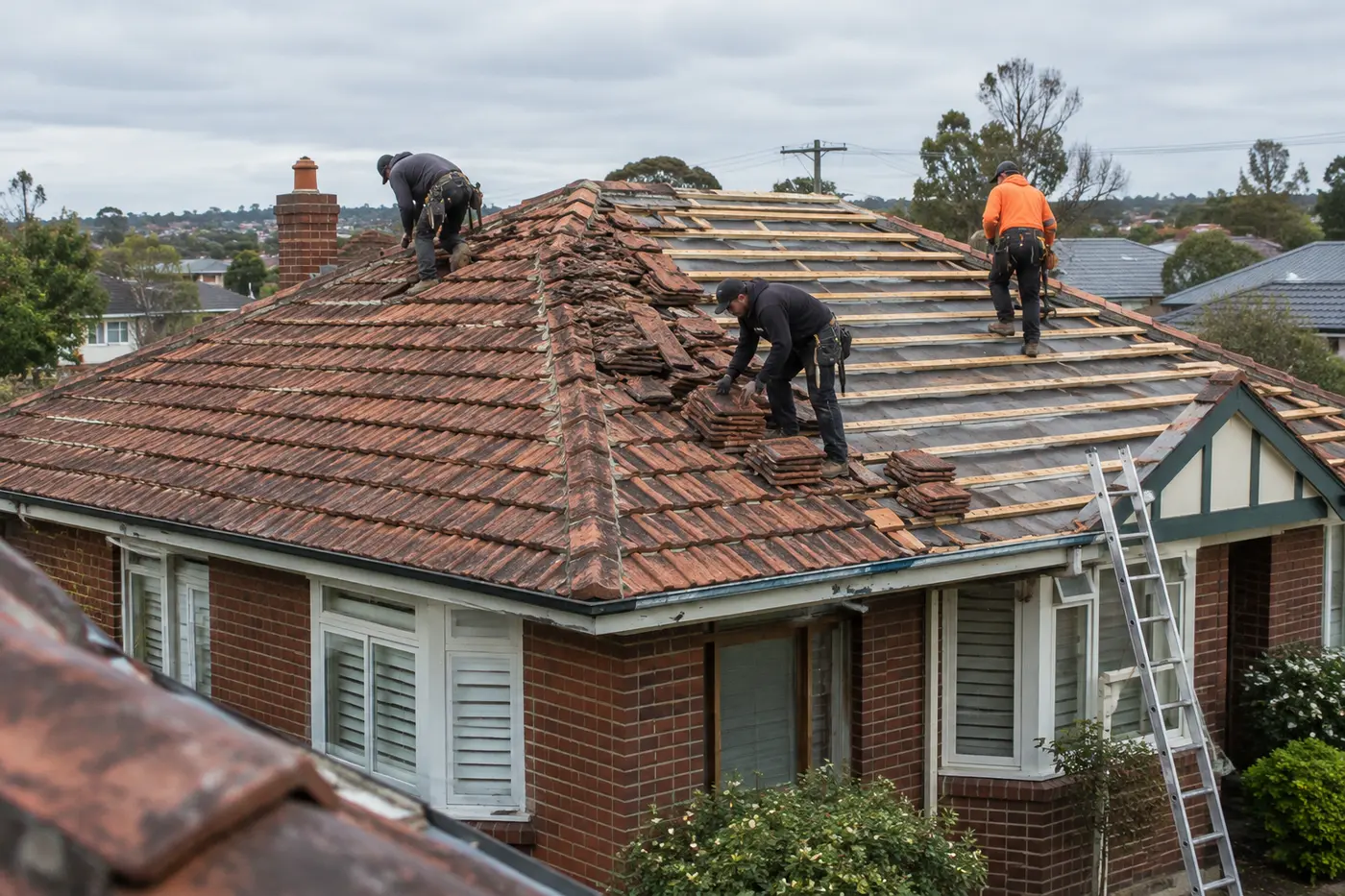
The quote is sitting on the kitchen bench and the figure at the bottom is bigger than you hoped. Maybe a roofer has told you the tiles are past saving. Maybe you've had one leak too many and you're done patching. Either way, the next question is the one we hear most weeks across Melbourne's north: what is a fair roof replacement cost in Melbourne, and does this quote stack up?
The honest answer is that the price lives in the detail of the job, not in a per square metre figure from a website. So rather than throw a number at you, this guide walks through what a replacement quote actually pays for, what makes one roof dearer than the house next door, and how to tell whether two quotes are even describing the same job.
A fair price can only come from someone who has been on your roof
We don't publish prices and we don't estimate over the phone. That isn't us being cagey. Two houses that look identical from the street can be very different jobs once the old tiles come off, and a figure guessed from a photo has a habit of growing once the work starts.
You'll find plenty of per square metre ranges online. Treat them as a rough idea at best. They're averages drawn from other homes, and they can't know your roof's pitch, how many hips and valleys it has, whether a truck can get near the house, or what state the timber is in under decades of tiles. What we do instead is a free on-roof inspection with photos, followed by a fixed written quote. That way the price you sign is the price for the work described.
Most of what you pay for is stuff you'll never see again
A new roof is a lot more than new tiles or sheets. When we quote a full replacement, the price is built from a handful of distinct stages, and knowing them makes any quote much easier to read.
Stripping the old roof and getting rid of it
Every old tile, batten or sheet comes off, right down to the frame. We never lay new over old. Then it all has to leave site, and disposal is a real cost on its own, especially with a heavy terracotta or concrete roof where the weight of old material adds up fast.
Sarking and battens
Sarking is the breathable membrane that sits under the roofing and catches any water that gets past it. Battens are the timber strips the tiles or sheets are fixed to. We install new treated pine battens to suit whichever system is going on, and new sarking where the roof type needs it. Plenty of older homes never had sarking at all, so this is often a genuine upgrade rather than a straight swap.
The new roofing material
This is the part everyone pictures: new concrete tiles, terracotta, or Colorbond and other steel sheeting. It's a big slice of the price, but it is rarely the whole story.
Ridges, hips, valleys and flashings
These are the joins and edges of the roof, and they're where most old roofs leak first. Flashings are the metal strips that seal the roof against walls, chimneys and skylights. Valleys are the channels where two roof faces meet. On a new roof they should all be new and installed to the manufacturer's specification, which takes skilled time. If you want the full scope laid out, here's what our roof replacements include from strip to handover.
Gutters and downpipes, if they need it
Not every job needs new gutters. But on a lot of postwar homes the original galvanised guttering is at the end of its life too, and replacing it while the roof is open is far easier than coming back later. A good quote will say clearly whether gutters are in or out.
Your choice of material matters, but less than most people expect
If you're replacing tile with tile, or switching to metal, the material does move the price. Colorbond usually costs less to install than a new tile roof because the sheets go on faster and there's no laying and pointing of hundreds of individual tiles. Terracotta sits at the pricier end. We've covered the trade-offs properly in our guide to choosing between Colorbond and tiles, including weight, noise and how each one handles a hailstorm.
Converting from tile to Colorbond is one of the most requested jobs we do, particularly on older frames where a lighter roof takes real strain off the timbers. The catch is that a conversion is more than a material swap. It means stripping tiles and battens, new sarking, new battens set out for metal, the full metal system with its own ridges, valleys and flashings, and often gutter work. It also includes a roof plumbing review so the new roof sheds water correctly. That's why a conversion quote can look quite different from a tile for tile replacement on the same house.
One thing to check early: if you're in a heritage overlay, as parts of Brunswick and Northcote are, there may be limits on what material you can use. We check what applies to your address before any work starts, but it's worth knowing before you fall for a colour chart.
Why your roof might cost more than the one next door
Once the material is chosen, the differences between quotes on similar homes nearly always come down to the same few things.
Height and pitch. A two-storey home or a steep roof needs more safety equipment, often scaffolding, and every task takes longer. This is genuine cost, not padding.
Shape. A simple gable is the cheapest shape to replace. Every extra hip, valley, chimney or skylight adds cutting, flashing and labour. The interwar bungalows through Coburg and Preston, with their chimneys and multiple hips, are a very different job to a plain postwar roof in Glenroy.
Access. Clear driveway access means material goes up and old tiles come down quickly. A house tight against the boundary, or a rear section with no vehicle access, means more carrying by hand.
What turns up underneath. This is the one nobody can fully price until the roof is open. Sagging rafters, rotten battens or water damage at the eaves are common on homes that have leaked for years. Ask any roofer how they handle timber repairs found during the strip, and get the answer in writing.
Old fibre cement. Some postwar homes and outbuildings in the north still have old fibre cement roofing or eaves, which can contain asbestos. That material has to be handled by a licensed asbestos removalist under Victorian rules, and it sits outside a normal roofing price. If you're not sure what your home has, raise it before you collect quotes.
Three to seven days is typical, and time is part of the price
For a typical single-storey home in Melbourne's north, a full tile replacement takes us 3 to 5 days. A tile to metal conversion usually runs 4 to 7 days. Two-storey homes and complicated roofs take longer. Labour is a big part of any roofing quote, so a roof that takes longer to strip and rebuild costs more. Simple as that. We confirm the timeline in the written quote so you can plan around it.
How to compare two replacement quotes properly
The cheapest quote is only good value if it covers the same work as the others. When you have two or three quotes in front of you, go through each one and look for:
- a full strip to the frame, with nothing laid over the old roof
- new sarking, and whether it covers the whole roof
- new battens, or old ones reused
- new flashings and valleys, not just new tiles or sheets
- gutters and downpipes: included, excluded or optional
- removal and disposal of old material
- how unexpected timber repairs will be priced
- a written warranty, and how long it runs
Ours, for what it's worth, is a 10-year written warranty on workmanship and materials, with the conditions set out in writing. And one last test: did the person quoting actually get on the roof? If not, the price is a guess.
Before you pay for a new roof, make sure you need one
This one surprises people. A lot of the tile roofs we're called out to replace don't need replacing at all. The 80 to 100 year old terracotta on the bungalows through Preston, Coburg and Reservoir is often still sound, and what has actually failed is the ridge mortar or a valley. Restoring a roof like that is almost always cheaper than replacing it. Our guide to whether a roof needs restoring or replacing explains how to tell the difference.
Replacement is the honest answer when the tiles have gone porous and soak up water, when hail has shattered too many tiles to restore economically, when the battens or frame have failed, or when repeated repairs haven't stopped the leaks. It's also a fair choice if you simply want to move from tile to Colorbond for lower maintenance. Whichever way your roof falls, we'll show you the photos and tell you plainly.
If you'd like a real number for your own home, book a free inspection and we'll give you a fixed written quote with the work itemised. You can see how the job runs, start to finish, on our roof replacement and new roofs page, or call us on (03) 9498 1000.