
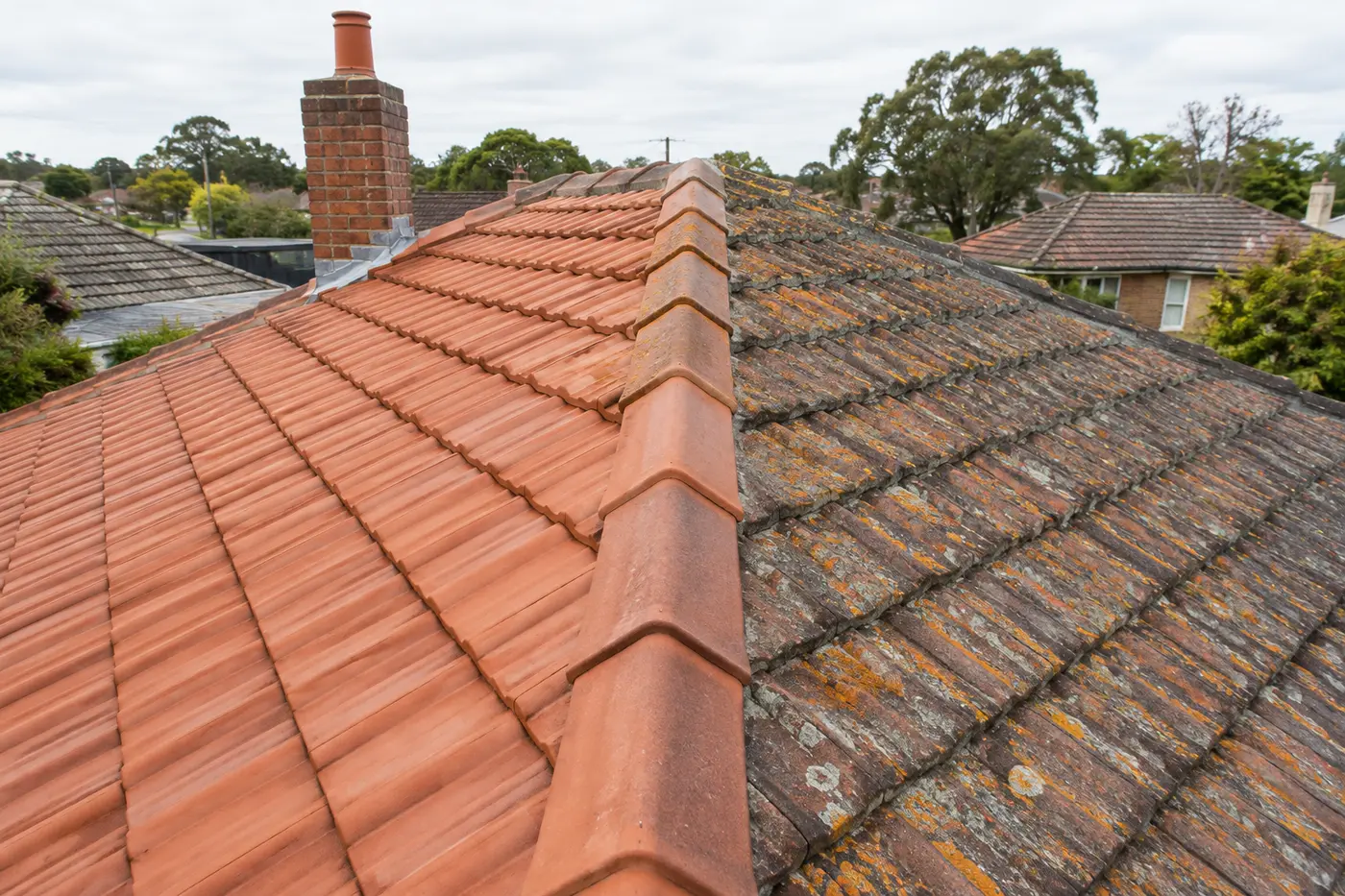
A flyer lands in the letterbox offering to seal your roof tiles for a price that sounds almost too reasonable. Or a neighbour mentions they had their roof sealed and it looks new again. Now you're wondering whether yours needs it, and whether sealing would stop that damp patch you noticed on the ceiling last winter.
Roof tile sealing comes up on a lot of the quotes we do across Melbourne's north. The honest answer is that it can be worth doing, but only on the right roof, at the right point, and after the jobs that actually keep the water out. This guide explains what sealing does, what it can't do, and how to tell which group your roof falls into.
Sealing protects the face of the tile, nothing more
A roof sealer is a liquid coating that soaks into or bonds to the surface of each tile. Some are clear, so the tiles keep their natural colour. Others are pigmented, which is really the first layer of a roof paint system. Either way, the job is the same: slow down how much water the tile soaks up, and give moss and lichen less to grip.
That matters because tiles are porous to different degrees. Concrete tiles absorb more moisture over time once their factory colour coat wears off. Terracotta is dense clay and holds up far better, but old unglazed terracotta still weathers, and the shaded south faces of plenty of roofs in Coburg and Preston end up green with moss and lichen.
Here's what sealing doesn't touch: the gaps between tiles, the mortar along the ridges, the metal valleys, and the flashings around chimneys and walls. On the roofs we inspect, that's where almost every leak starts.
A sealer will not stop a leak
This is the part the cheap flyers leave out. Water gets into a tile roof through cracked or slipped tiles, crumbling ridge pointing, rusted or blocked valleys and failed flashings. It runs through gaps. A sealer sprayed over the top doesn't close a gap between two tiles, and it doesn't rebuild fretted mortar under a ridge cap.
So if your ceiling is stained, sealing on its own is money spent on the wrong problem. The leak needs finding and fixing first. Our guide to what fixing a leaking roof involves and costs walks through the usual sources.
The same goes for the hardware store fix of running silicone along a cracked tile. It might hold for a while as a stopgap. The crack is still there, though, and silicone smeared over a tile can make the proper repair messier later.
Sealing earns its money as one step in the right order
Sealing makes sense inside a properly sequenced job, not as a job on its own. On a full restoration, ours runs like this:
- High pressure clean, then a biocide treatment for moss and lichen
- Broken or slipped tiles replaced
- Ridge caps rebedded and repointed in flexible polymer mortar
- Valleys checked, then resealed or replaced
- A penetrating primer to bind the cleaned surface
- Two coats of weatherproof coating
Notice where the sealing sits. Near the end, after the clean and after every repair. Seal a dirty roof and you lock the grime and moss spores in. Seal a roof with crumbling ridges and you've made it look tidy while it keeps letting water through.
Concrete and terracotta need different treatment
The type of tile you have changes the decision more than anything else. If you're not sure what's on your roof, our guide to telling concrete and terracotta tiles apart will help.
Concrete tiles usually need more than a clear sealer
Most of the concrete tile roofs we see in Bundoora, Watsonia, Greensborough, Mill Park and Epping share the same problem. The tiles are sound, but the factory colour coat has chalked and faded under UV long before the tile itself is anywhere near failing. Once that coat goes, the tile takes on more water.
A clear sealer over a faded, chalky concrete tile won't bring the colour back, and it won't give the tile a full protective skin. What these roofs generally need is a primer made for concrete, followed by a pigmented coating system. In other words, a recoat. That's the heart of our roof restoration service, and on a 20 to 30 year old estate roof it's usually the right call rather than a replacement.
Terracotta can often stay natural
Terracotta is a different story. Plenty of owners of interwar bungalows in Preston, Coburg, Reservoir and Ivanhoe love the colour of their original tiles and don't want them painted. For those roofs, a thorough clean, the repairs, and then a clear penetrating sealer can keep the natural look while giving the surface some protection.
Glazed terracotta is the exception. Those shiny tiles already have a hard fired surface, and sealers and coatings don't bond well to it. On a glazed roof in good order, a clean and the structural repairs are usually all it needs.
Seal, recoat or leave it: how we usually decide
When an owner asks us whether to seal, the answer tends to fall out of a few questions.
Is the roof leaking, or are the ridges failing? Then repairs come first, and sealing is a later decision. Is it concrete with a faded, chalky surface? It needs a primer and coating, not a clear sealer. Is it unglazed terracotta you want kept natural? A clear sealer after a proper clean is a reasonable choice. Glazed terracotta that's in good shape? Leave the surface alone and look after the ridges and valleys.
If you're leaning towards a colour change, that's really a painting job, and our guide to what roof painting costs covers what drives that price.
A seal-only quote should make you ask questions
Be cautious of a quote to seal your roof that never mentions pointing, valleys or broken tiles. Spraying sealer is the quickest part of the work. The ridges and repairs are where the time goes, and they're what keep your ceiling dry.
Ask any quote to spell out what happens before the sealer goes on, which product suits your tile type, and what warranty applies. Our restorations carry a 10 year written guarantee on workmanship and materials (conditions apply), and the scope is set out in writing after a free inspection.
Get the roof looked at before you spend anything
Whether sealing is worth it on your home comes down to the tile type, the state of the ridges and valleys, and how you want the roof to look afterwards. We'll get up there, take photos, and tell you plainly whether you need a seal, a full recoat or just a few repairs. Book a free inspection through our tile and concrete roof restoration page, or call us on (03) 9498 1000.